Prepaid vs Postpaid SIM in Pakistan: Which One Should You Choose?
Compare prepaid vs postpaid SIMs in Pakistan, including costs, billing, packages, advantages, disadvantages and which SIM type is best for you.
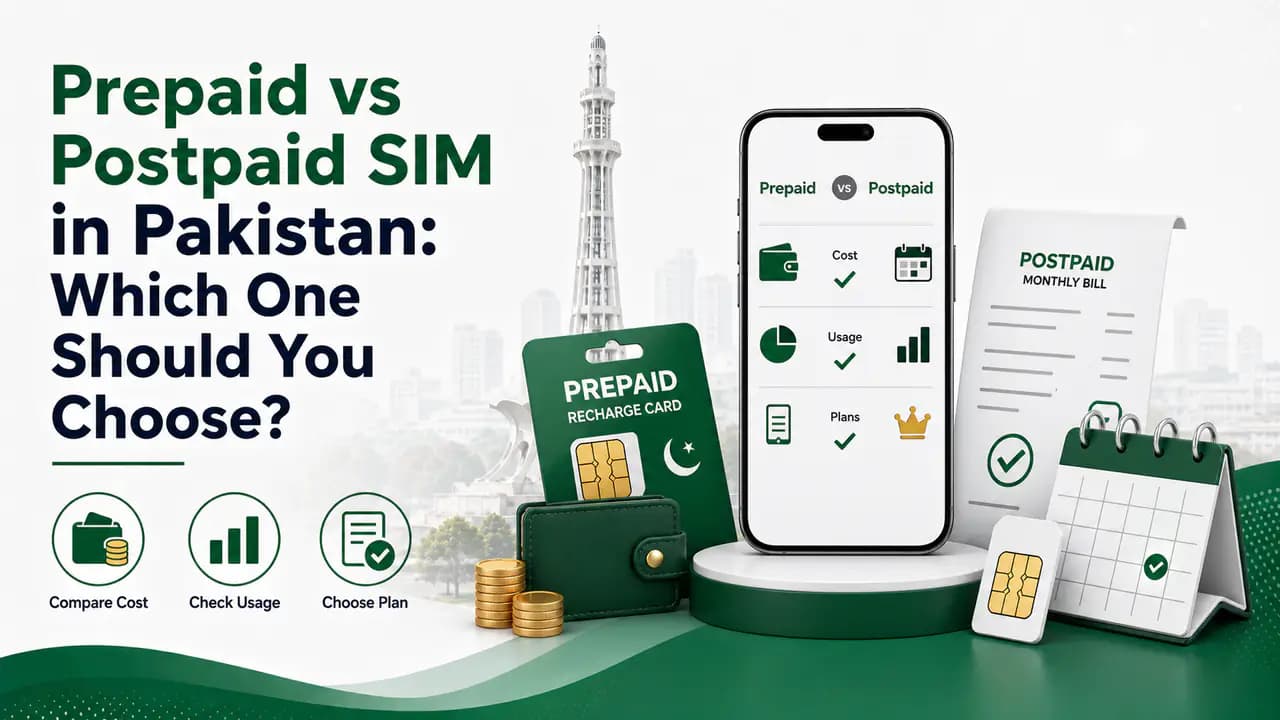
Choosing between a prepaid and postpaid SIM can seem simple, but the difference becomes important once you start using mobile data, making regular calls, travelling, or managing a business number.
Both types of SIM can provide calls, SMS and mobile internet. The main difference is when you pay for the service and how your usage is managed.
With a prepaid SIM, you normally add balance or subscribe to a bundle before using the service. With a postpaid SIM, you use the service during a billing period and receive a bill afterward.
In Pakistan, major mobile networks offer prepaid services, while postpaid customers can choose from monthly plans and other postpaid packages. The exact prices, data allowances, minutes and terms change frequently, so it is better to check the operator's current package page before subscribing.
30 sec readQuick answer
What Is a Prepaid SIM?
A prepaid SIM is a mobile connection where you pay in advance.
You can load balance into your account through a recharge, mobile wallet, banking service, retailer or other supported payment method. You can then use that balance for calls, SMS and internet or subscribe to a bundle.
For example, if you have Rs. 500 available and subscribe to a package costing Rs. 300, the package is activated according to its terms. Once the bundle expires or its resources are consumed, you may need another recharge or bundle.
This gives prepaid users a simple way to control spending.
How prepaid SIMs work
The basic process is:
How prepaid SIMs work
Buy and register the SIM
Obtain and register the SIM through an authorized operator channel with the required identity verification.Add balance to the account
Load balance through recharge, mobile wallet, banking service, retailer or another supported payment method.Subscribe to a suitable package or use the available balance
Choose a bundle that matches your needs or use pay-as-you-go balance for calls, SMS and internet.Use calls, SMS and internet
Use the services included in your package or deducted from your available balance.Recharge when your balance or package resources run out
Add more balance or subscribe to a new package when your current resources are used up or expire.
Many prepaid packages are available for daily, weekly and monthly periods. Operators can also provide special offers for data, calls, SMS or combinations of these services.
Jazz, for example, currently lists prepaid packages with different validity periods and combinations of data, on-network minutes, off-network minutes and SMS.
What Is a Postpaid SIM?
A postpaid SIM works in the opposite way.
Instead of paying for every month's service in advance, you use your connection during the billing period and pay the resulting bill afterward.
A postpaid package normally includes a defined amount of data, calls and SMS. Depending on the plan, additional usage may be charged when the included resources are exhausted.
Postpaid services can also provide features that are useful for people who want a regular monthly mobile connection rather than repeatedly recharging their number.
For example, Jazz currently offers multiple postpaid plans with monthly resources and a defined billing cycle.
Prepaid vs Postpaid: Main Difference
The easiest way to understand the difference is this:
These are general differences. Individual operators can have different rules, package structures, security requirements and billing policies.
Prepaid SIM Advantages
1. Better control over spending
One of the biggest advantages of prepaid is that you can decide how much money to put into the account.
If you normally spend Rs. 1,000 per month, you can recharge approximately that amount and choose packages accordingly.
This makes prepaid particularly useful for students and people who want strict control over their mobile expenses.
2. No regular monthly bill
You don't normally have to wait for a monthly invoice.
You pay when you recharge or purchase a package.
This can make prepaid easier for people who do not want a recurring monthly payment.
3. Easy to change packages
Prepaid users usually have access to a wide range of short-term and monthly bundles.
If your usage changes from week to week, a prepaid connection can be convenient because you can choose a package according to your current needs.
4. Lower financial commitment
You can generally use the SIM according to the balance and packages available to you instead of committing to a larger monthly plan.
This makes prepaid a practical choice for a secondary number.
5. Good for occasional users
If you don't make many calls or use much internet, paying only when you need service can make more sense than maintaining a larger monthly plan.
Prepaid SIM Disadvantages
Prepaid also has some limitations.
You need to monitor your balance
If your balance runs out, services that depend on balance may stop or require another recharge.
Packages expire
A package may have a specific validity period. If you don't use all the resources before expiry, the remaining resources may not necessarily carry forward.
Heavy users may need frequent recharges
Someone who uses large amounts of mobile data or makes many calls may find repeated recharging inconvenient.
Some services may work differently
Certain operator services, international features or premium plans may have different requirements for prepaid and postpaid customers.
Postpaid SIM Advantages
1. Convenient monthly billing
For someone who uses their phone every day, postpaid can be more convenient because the account operates through a regular billing cycle.
Instead of repeatedly purchasing recharge, you receive a bill for the applicable billing period.
2. Useful for heavy users
People who regularly use mobile data and calls may prefer a postpaid package with larger monthly allowances.
Current Pakistani operators offer postpaid plans containing combinations of data, all-network minutes, SMS and other services.
3. Better suited to business users
A postpaid number can be convenient for employees, business owners and people who depend heavily on one number for daily communication.
Having a predictable monthly plan can make mobile expenses easier to organize.
4. More structured account management
Postpaid services often provide detailed billing and usage information.
For example, Jazz provides postpaid customers with options for checking bill information, payment history and usage through its self-service channels.
5. No need to recharge before every use
As long as the account remains active and within its applicable credit and package conditions, you can use the service without first adding prepaid balance.
Postpaid SIM Disadvantages
1. You receive a bill
The main difference is also the biggest responsibility.
You must pay the bill after the billing period.
If you miss the payment deadline, additional charges or service restrictions may apply according to the operator's terms.
Jazz, for example, currently states that a late payment fee can apply to certain postpaid plans when bills remain unpaid after the due date.
2. Extra usage can increase the bill
A postpaid package normally includes a specific amount of data, minutes or SMS.
If you use resources beyond the included allowance, additional charges can apply depending on the plan.
This is why postpaid users should understand their package's out-of-bundle rates.
3. Security deposit or other requirements may apply
Some postpaid plans can have additional requirements such as a security deposit, credit limit or documentation.
For example, Jazz's current prepaid-to-postpaid conversion information lists an original CNIC, an active SIM registered to the customer's name, biometric verification and a security deposit for the relevant conversion process.
Requirements vary by operator and package.
Which Is Better: Prepaid or Postpaid?
There isn't one answer for everyone.
The better option depends on how you use your mobile number.
Choose prepaid if:
- You want strict control over spending.
- You are a student.
- You don't use your SIM heavily.
- You only need a secondary number.
- You prefer short-term packages.
- You don't want a monthly bill.
- You want to recharge only when necessary.
Choose postpaid if:
- You use your number heavily every month.
- You regularly need large amounts of data.
- You make frequent calls.
- You want monthly billing.
- You use the number for business.
- You don't want to repeatedly recharge.
- You prefer a structured monthly mobile plan.
Prepaid vs Postpaid for Students
For many students, prepaid is the simpler option.
Students often have changing monthly expenses and may not need a large fixed mobile plan. With prepaid, they can select a weekly or monthly package based on their available budget.
However, a student who uses a large amount of data every month may find a suitable postpaid plan more convenient.
The important thing is not whether prepaid is automatically cheaper. Compare the actual amount of data, minutes and SMS you use with the total cost of the package.
Prepaid vs Postpaid for Business
For business users, postpaid can be more convenient when the number is used continuously.
A business number may be used for customer calls, WhatsApp communication, emails, mobile data, banking alerts and other services throughout the month.
A monthly plan can make this easier to manage.
However, a business that wants strict spending limits for individual employees may prefer prepaid connections instead.
The best choice depends on how the company manages mobile expenses.
Can You Change Prepaid to Postpaid?
In many cases, operators provide a prepaid-to-postpaid conversion process.
The exact requirements depend on the operator.
For example, Jazz currently explains a conversion process involving a request at a Jazz Franchise or Customer Service Center, the original CNIC, an active SIM registered in the customer's name, biometric verification and selection of a postpaid plan.
Don't assume that the requirements or charges are identical across all networks.
Before converting, ask the operator about:
- Current postpaid plans
- Security deposit
- Credit limit
- Billing date
- Taxes
- Out-of-bundle rates
- Cancellation or conversion conditions
- International roaming
- Data and call limits
Can You Change Postpaid to Prepaid?
Depending on the operator and the type of connection, conversion from postpaid to prepaid may be possible under the operator's current policies.
Because postpaid accounts involve billing, outstanding amounts and account closure procedures, you should contact the relevant network or visit its official service center before requesting the change.
Make sure all outstanding bills and other applicable charges are understood before changing the connection type.
What About Taxes?
Mobile services in Pakistan can be subject to applicable government taxes.
The final amount you pay may therefore be different from a package's basic advertised price if taxes are not already included.
Always check whether the displayed price is tax-inclusive.
For example, Jazz currently displays many of its prepaid and postpaid package prices as tax-inclusive, while individual service terms can still specify applicable government taxes.
Tax rates and telecommunications charges can change, so older articles and social-media posts should not be treated as current pricing information.
How to Choose the Right SIM Type
Before choosing prepaid or postpaid, look at your actual mobile usage.
Ask yourself these questions:
How much data do you use?
If you use only a few GB each month, prepaid may be enough.
If you regularly consume large amounts of data, compare the monthly postpaid plans with the prepaid bundles you currently use.
How many calls do you make?
Someone who makes only occasional calls may not benefit from a large postpaid package.
A person who makes calls throughout the day should compare all-network and same-network minutes carefully.
Do you want a fixed monthly expense?
If yes, postpaid may be more convenient.
If you prefer deciding your mobile spending each time you recharge, prepaid may be better.
Do you need international roaming?
If you travel outside Pakistan, check the operator's roaming terms before choosing a plan.
Do not assume that every prepaid and postpaid connection has identical roaming services.
Do you need the number for business?
If the number is important for customers or business operations, reliability, account management and billing options may matter more than simply choosing the cheapest package.
Prepaid vs Postpaid: Don't Compare Only the Package Price
A common mistake is comparing only the advertised price.
For example, one package might cost less but include fewer all-network minutes or less usable data.
Another package may appear expensive but include more resources and additional services.
When comparing plans, check:
- Total price including taxes
- Data allowance
- All-network minutes
- Same-network minutes
- SMS
- Package validity
- Out-of-bundle rates
- Auto-renewal
- Roaming
- Additional services
- Billing conditions
- Late payment charges for postpaid
This gives you a much more accurate comparison.
Is Postpaid More Expensive Than Prepaid?
Not necessarily.
It depends on the package and your actual usage.
A prepaid user who repeatedly buys small bundles can potentially spend more than someone on a suitable postpaid plan.
At the same time, a postpaid user can receive a larger bill if they exceed the package's included resources.
Therefore, the correct question is not simply:
"Is prepaid cheaper than postpaid?"
Instead ask:
"Which option gives me the services I need at the lowest total cost?"
Important Things to Check Before Getting a SIM
Whichever type you choose, the SIM should be registered through the proper process.
Use an authorized operator franchise or service center and complete the required identity verification.
Do not allow another person to obtain or register a SIM using your CNIC without your knowledge.
After obtaining a new SIM, it is also a good habit to check the SIMs associated with your identity so that you can identify anything unexpected.
Pakistan's telecommunications authorities and operators provide official channels for SIM-related complaints and account services.
If you discover an unfamiliar SIM associated with your identity, contact the relevant operator and use the appropriate PTA complaint channel rather than relying on unofficial websites claiming to provide private subscriber information.
Frequently Asked Questions
Prepaid vs postpaid FAQ
Related articles
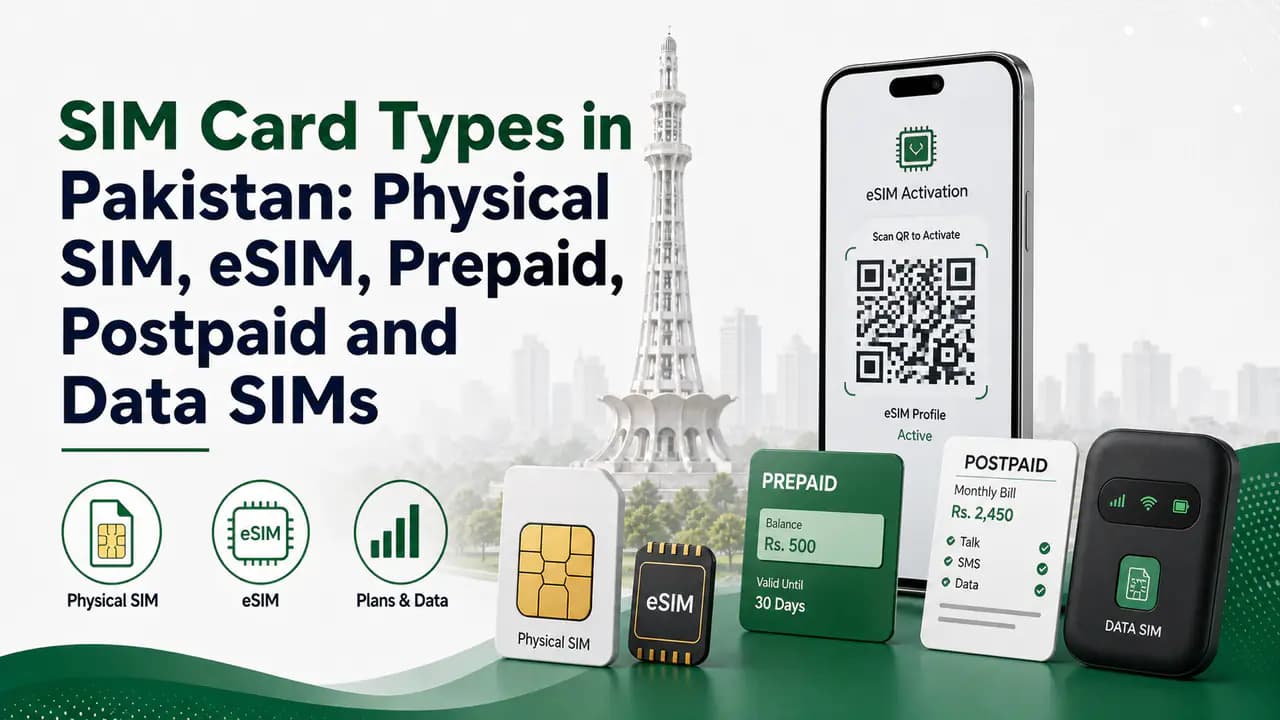
SIM Card Types in Pakistan: Physical SIM, eSIM, Prepaid, Postpaid and Data SIMs
Compare SIM card types in Pakistan — physical SIM, eSIM, prepaid, postpaid, data SIMs, sizes, IoT options, and how to choose the right one for your phone.
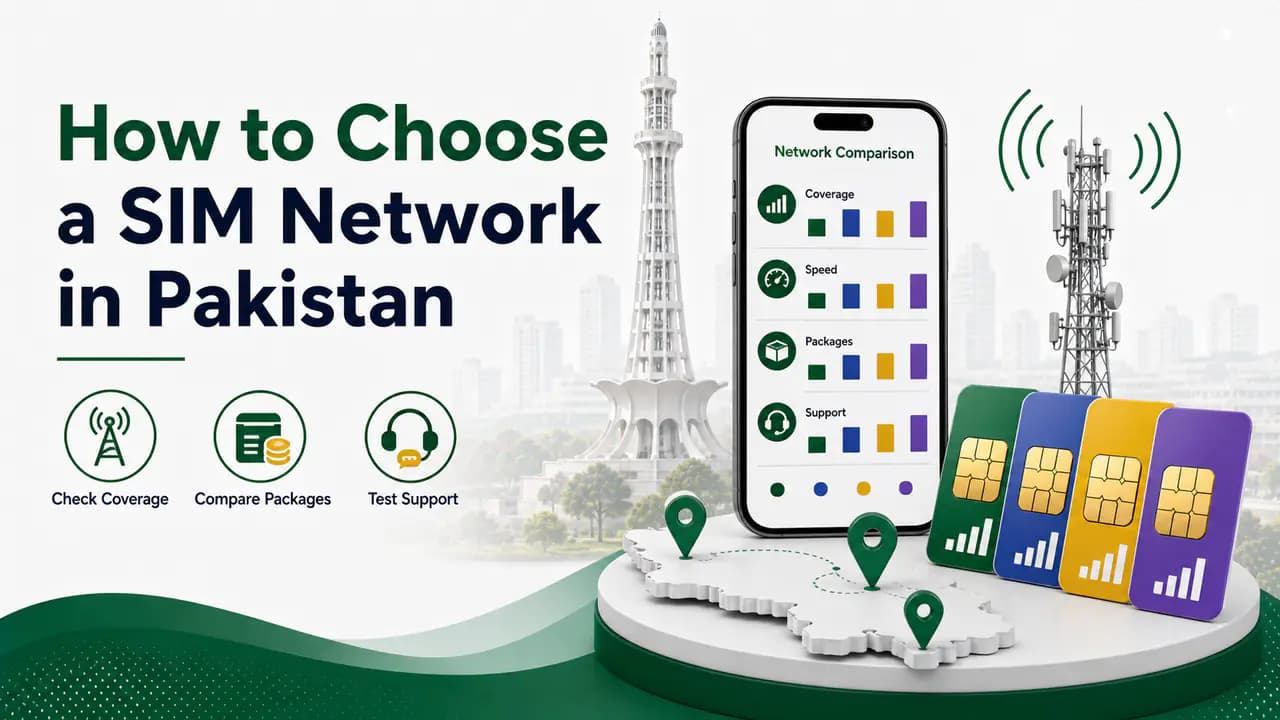
How to Choose a SIM Network in Pakistan
Learn how to choose the best SIM network in Pakistan by comparing coverage, mobile data, 4G/5G, network congestion, packages and reliability.
About the author
Bottom Line
Prepaid and postpaid SIMs use the same physical technology in many cases. The real difference is how you pay and how your account is managed.
If you want simple spending control and don't want a monthly bill, start with prepaid. If you use your number heavily and prefer a structured monthly plan, compare postpaid options on your network.
Don't compare plans by advertised price alone. Look at total cost including taxes, data allowance, minutes, validity, out-of-bundle rates, and billing conditions.
Before making the final decision, check the current packages offered by your network because prices, allowances and terms can change.